Mobil 1 Extended Performance Motor Oil 0W-20, 5 Quart
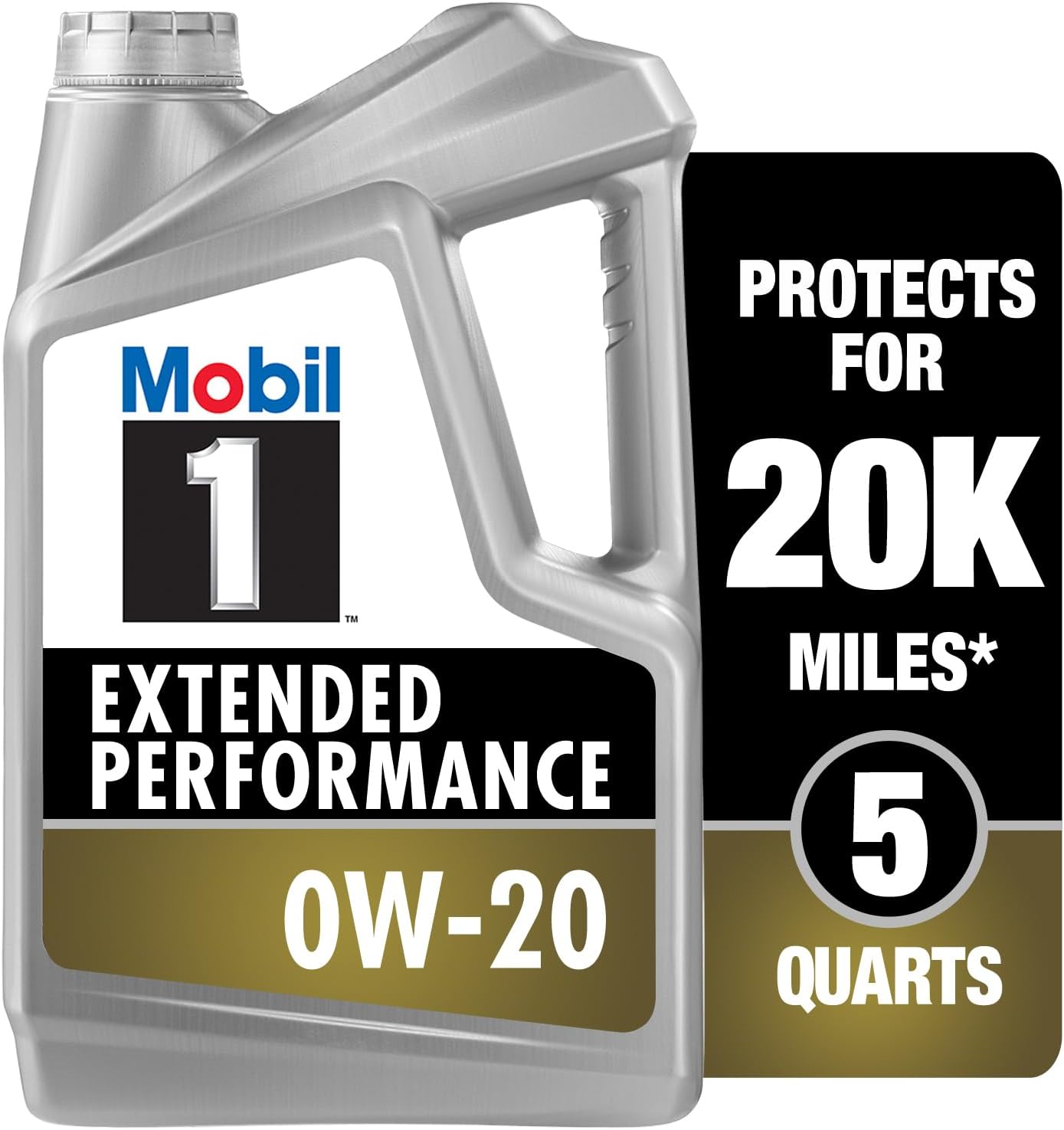
Mobil 1 Extended Performance 0W-20 is a full‑synthetic motor oil formulated to provide extended protection, strong deposit control, and stable viscosity across cold starts and sustained high‑load driving. It’s aimed at modern gasoline engines that call for a low‑viscosity synthetic and for drivers who prefer longer drain intervals when permitted by the vehicle manufacturer.
Overview
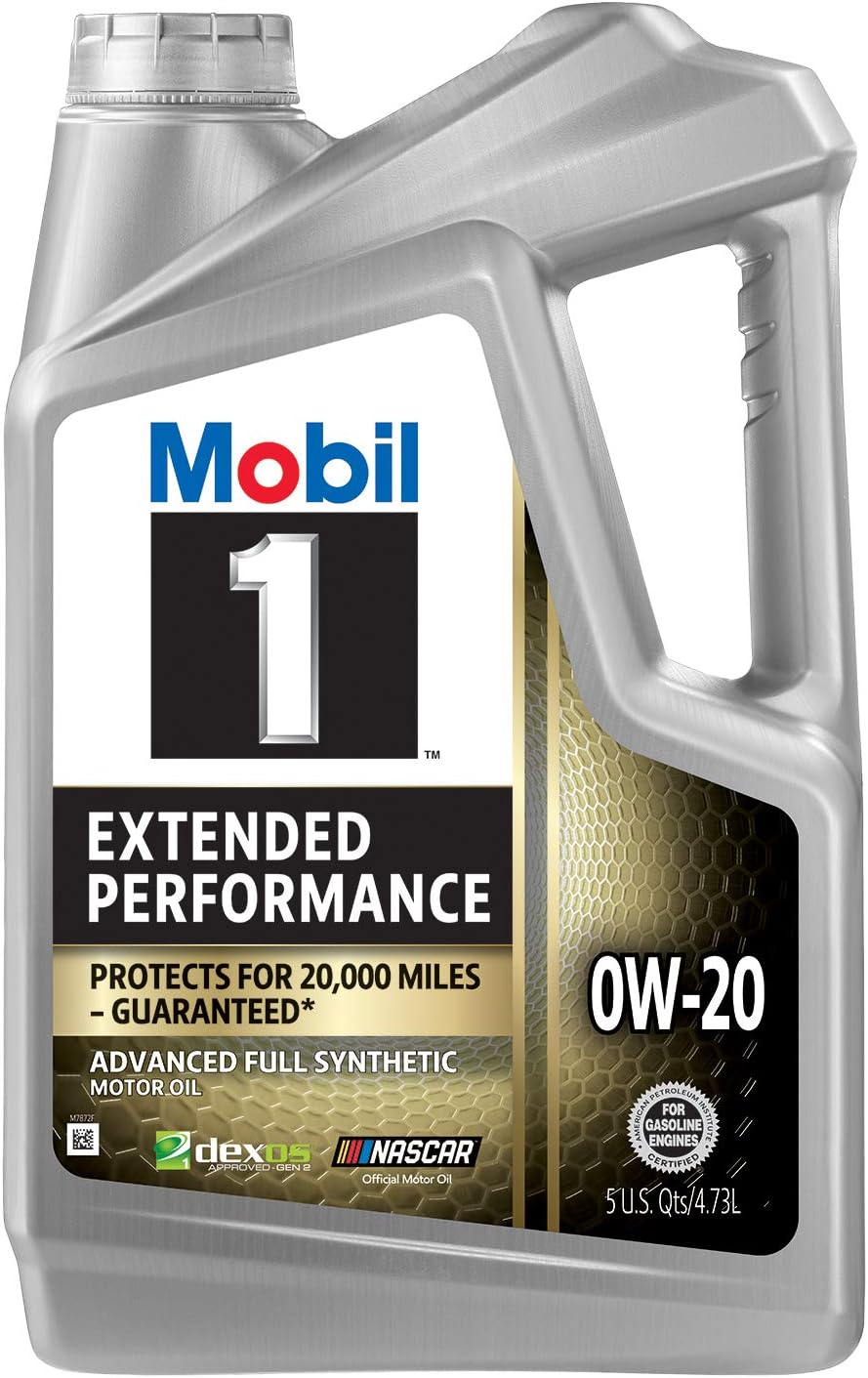
This is an extended‑performance, full‑synthetic 0W-20 motor oil intended to protect modern gasoline engines. It’s formulated to provide stable lubrication across temperature ranges and to help reduce wear on moving parts.
In everyday use it keeps oil films intact during cold starts and under higher operating temperatures, while resisting breakdown that can lead to deposits. Any gains in fuel economy or longer service intervals will vary by model/version and driving habits.
Recommended for drivers whose vehicles call for a 0W-20 synthetic and for those who prefer a premium oil aimed at longer‑lasting protection. The main problem it addresses is engine wear and oil degradation over time—always follow the vehicle manufacturer’s oil specification and service recommendations.
Key Features
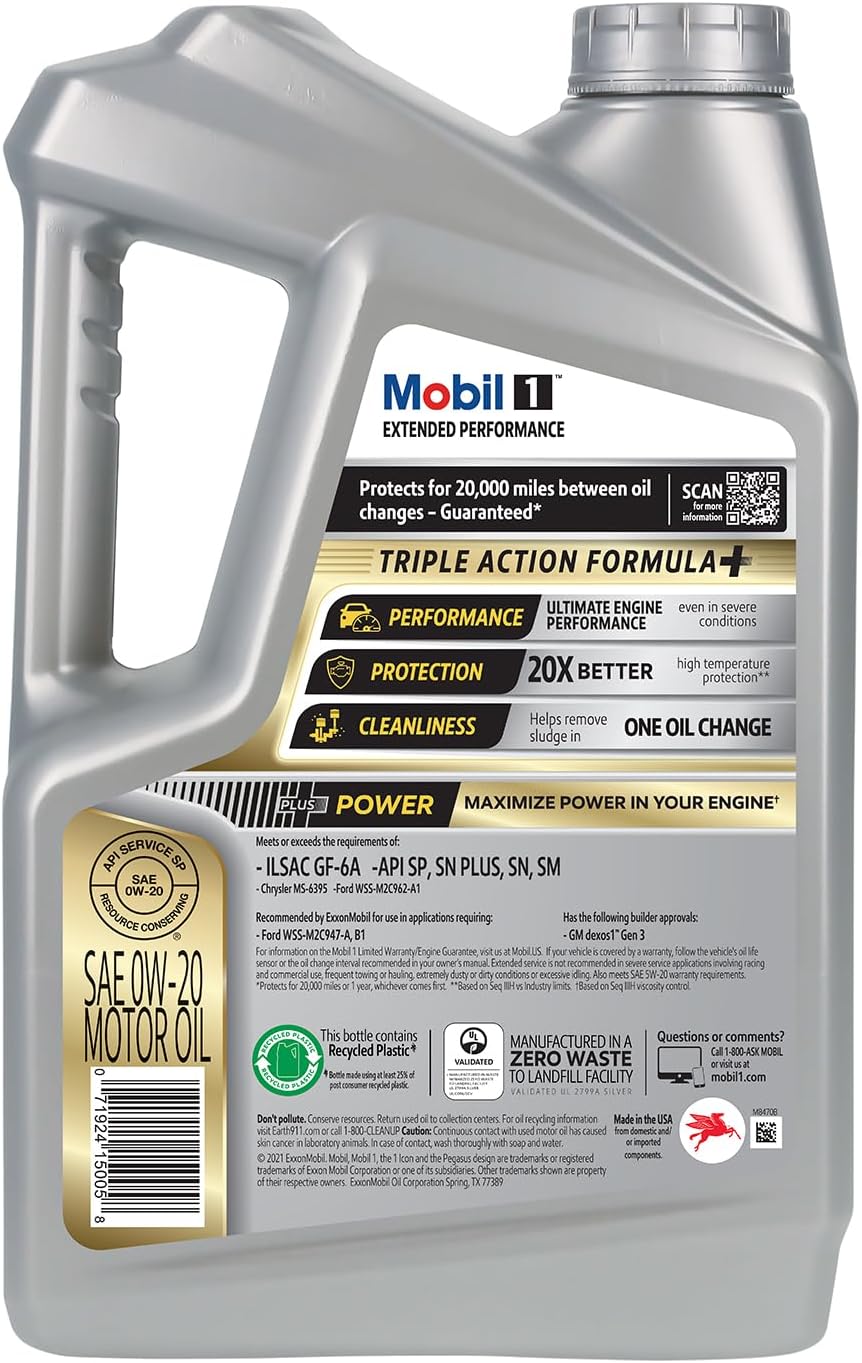
The formulation relies on a fully synthetic base and a blended additive system designed to provide consistent film strength across a wide temperature range. That consistency improves lubrication at start‑up and helps the engine maintain protection during higher‑load driving, reducing metal‑to‑metal contact.
A focus on deposit control and detergent chemistry helps keep combustion chambers, valves, and oil passages cleaner over time, which supports steady performance and can reduce the frequency of maintenance caused by buildup. Viscosity stability under stress also means bearings and rings receive more predictable protection, which matters for engine longevity.
This product is built for longer service intervals and sustained protection in modern powertrains, though recommended drain periods and suitability vary by model/version—always follow the vehicle manufacturer’s guidance. Compatibility with contemporary seals and emissions systems is expected, but checking your owner’s manual before switching is advised.
Real-World Performance

On daily driving—short commutes, errands, and highway runs—the formulation delivers predictable lubrication from cold start through normal operating temperature. Expect steady oil pressure and a consistent engine response once things warm up, although the exact feel will vary with engine design and ambient conditions.
When pushed by longer highway stretches or heavier loads the oil holds film strength and thermal stability, helping maintain protection during sustained operation; how long it remains effective depends on vehicle design, driving habits, and the service interval you follow. It also helps limit deposits and keeps passages cleaner in many engines, but outcomes vary by model/version and prior maintenance.
There are a few practical caveats: older high‑mileage engines can respond differently after switching oils, so monitor seals and leaks, and don’t assume extended drain intervals without consulting manufacturer guidance. If you have atypical operating conditions or want to confirm durability, oil analysis is a useful way to verify real‑world performance for your specific vehicle.
Ease of Use and Maintenance

Refilling and routine service are straightforward if you follow the vehicle manufacturer’s procedures. Work on a level surface, use a funnel to minimize spills, and consult the owner’s manual for the correct fill procedure and capacity since this varies by model/version.
Changing the oil follows the usual steps: drain the old fluid, replace the filter, reinstall hardware to the recommended torque, and refill to the proper level. Recommended change intervals depend on the vehicle and driving conditions, so adhere to the maintenance schedule in your vehicle’s documentation rather than relying on a fixed number.
Ongoing upkeep is simple: check the oil level with the dipstick at regular intervals, watch for leaks or sudden drops in level, and note any changes in texture, color, or smell that could indicate an issue. Keep records of service dates and mileage to track when the next change should occur.
Store unused oil in its original, tightly sealed container in a cool, dry place away from direct sunlight and children. Clean up any spills promptly using absorbent materials, and dispose of used oil and filters at an authorized recycling or collection center to meet local regulations.
Pros and Trade-Offs

The formula delivers strong protective qualities typical of fully synthetic lubricants, helping maintain cleanliness inside the engine and providing dependable flow in a range of temperatures. Many owners notice smoother starts and consistent oil pressure under everyday driving and more demanding conditions.
Another advantage is that it’s intended for extended service intervals when allowed by the vehicle manufacturer, which can reduce maintenance frequency for some users; actual change intervals vary by model/version. The product is also suited to modern engines engineered for lower‑viscosity oils and improved fuel efficiency.
On the downside, it typically costs more than conventional motor oil, and the benefits are most apparent in newer or higher‑performance engines. For older vehicles or engines with specific wear patterns, the improvement may be marginal and worth weighing against price.
Ultimately, the right choice depends on your vehicle’s specifications, driving habits, and maintenance preferences. Follow the owner’s manual for compatibility and recommended service intervals, and consult a technician if you’re unsure whether a synthetic option is the best fit.
Who This Product Is For

Drivers of modern, fuel‑efficient cars that specify a synthetic, low‑viscosity lubricant will see the most benefit. Those who do a lot of highway miles or want confident cold‑start protection often choose this kind of formulation for its consistency and thermal stability.
DIYers and independent maintenance shops who value a well‑known brand and easy sourcing will find it convenient for routine changes. It performs reliably across a range of everyday driving conditions and climates, but you should always match the oil to the vehicle’s required specification before switching.
This is not the best option for older or classic engines that need heavier or non‑synthetic oils, nor for vehicles whose manufacturer explicitly calls for a different viscosity or type. If cost is the primary concern and a conventional blend is acceptable for your car, more economical choices may be preferable.
As an Amazon Associate, I earn commission on qualified purchases.