AstroAI L7 Tire Inflator Portable Air Compressor Cordless Mini Bike Pump with Digital Dual Values Display, 150 PSI Car Tires Air Pump with LED Lights&Pressure Gauge for Auto, Motorcycles, Bikes, Balls Review
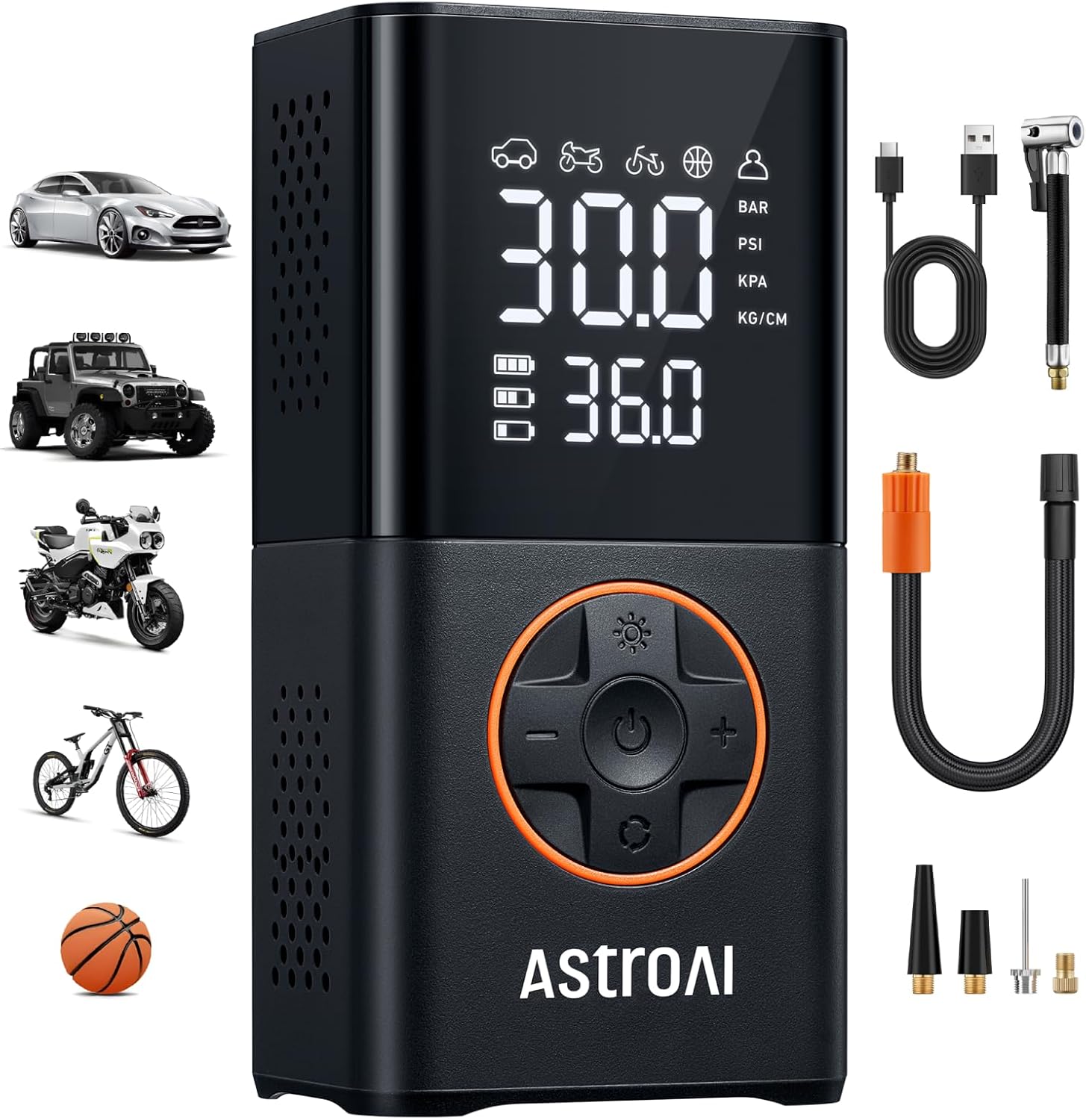
The AstroAI L7 is a compact, cordless inflator that delivers up to 150 PSI with a dual-value digital display, presets and automatic shutoff. USB-C charging, an integrated LED work light and a small USB output make it a handy roadside and cycling companion, though it’s intended for occasional use rather than continuous, heavy-duty work.
Compact Cordless Inflator Overview
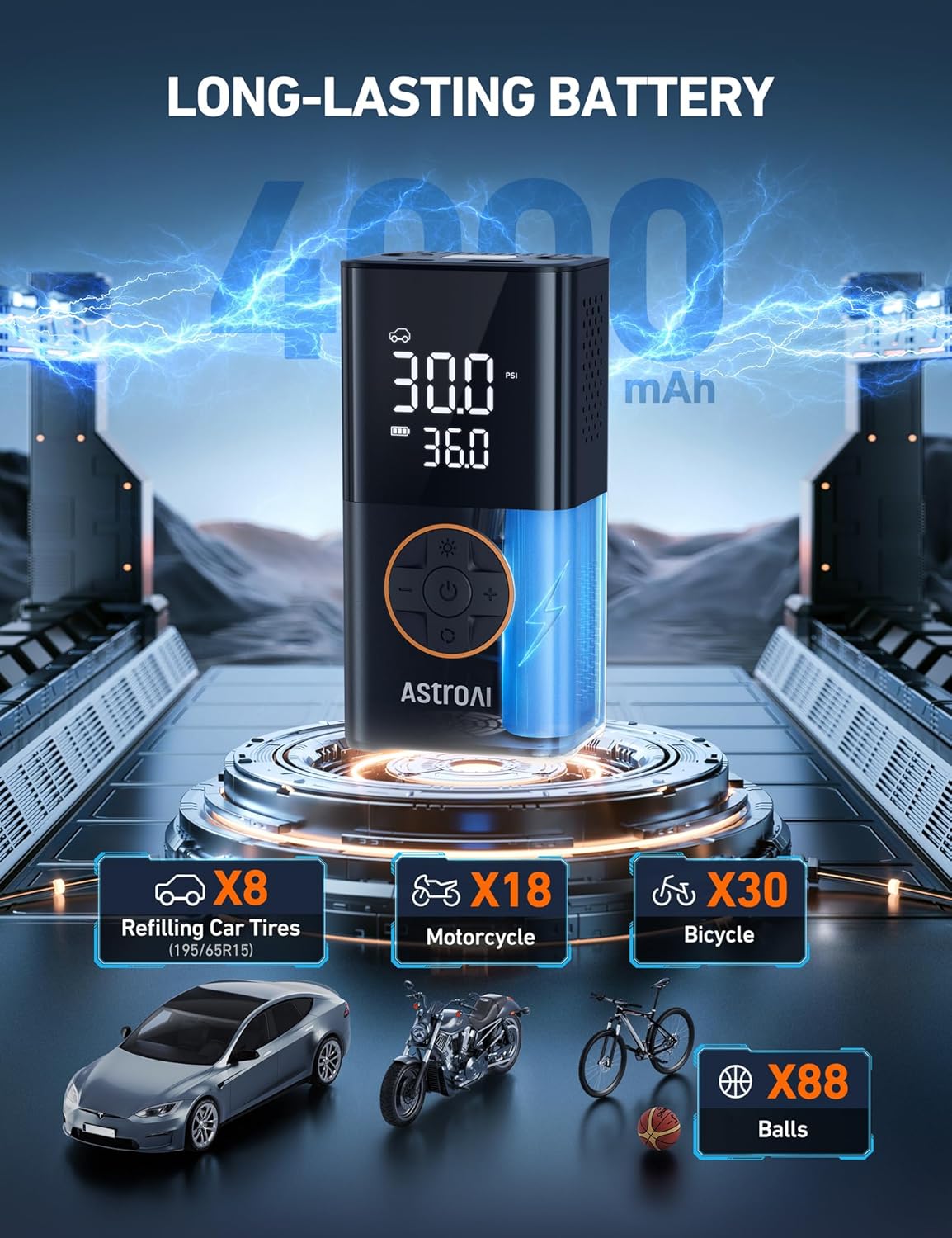
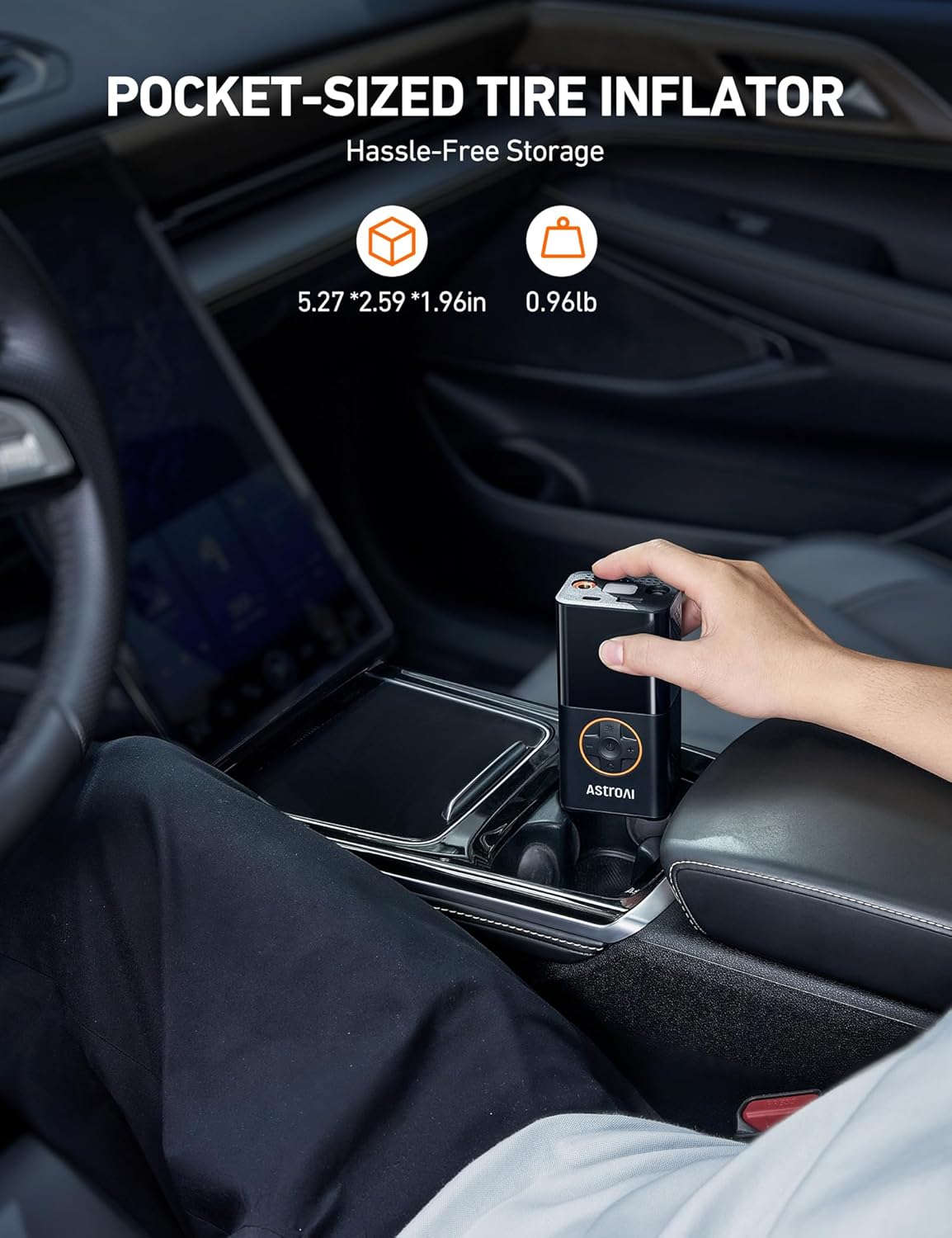
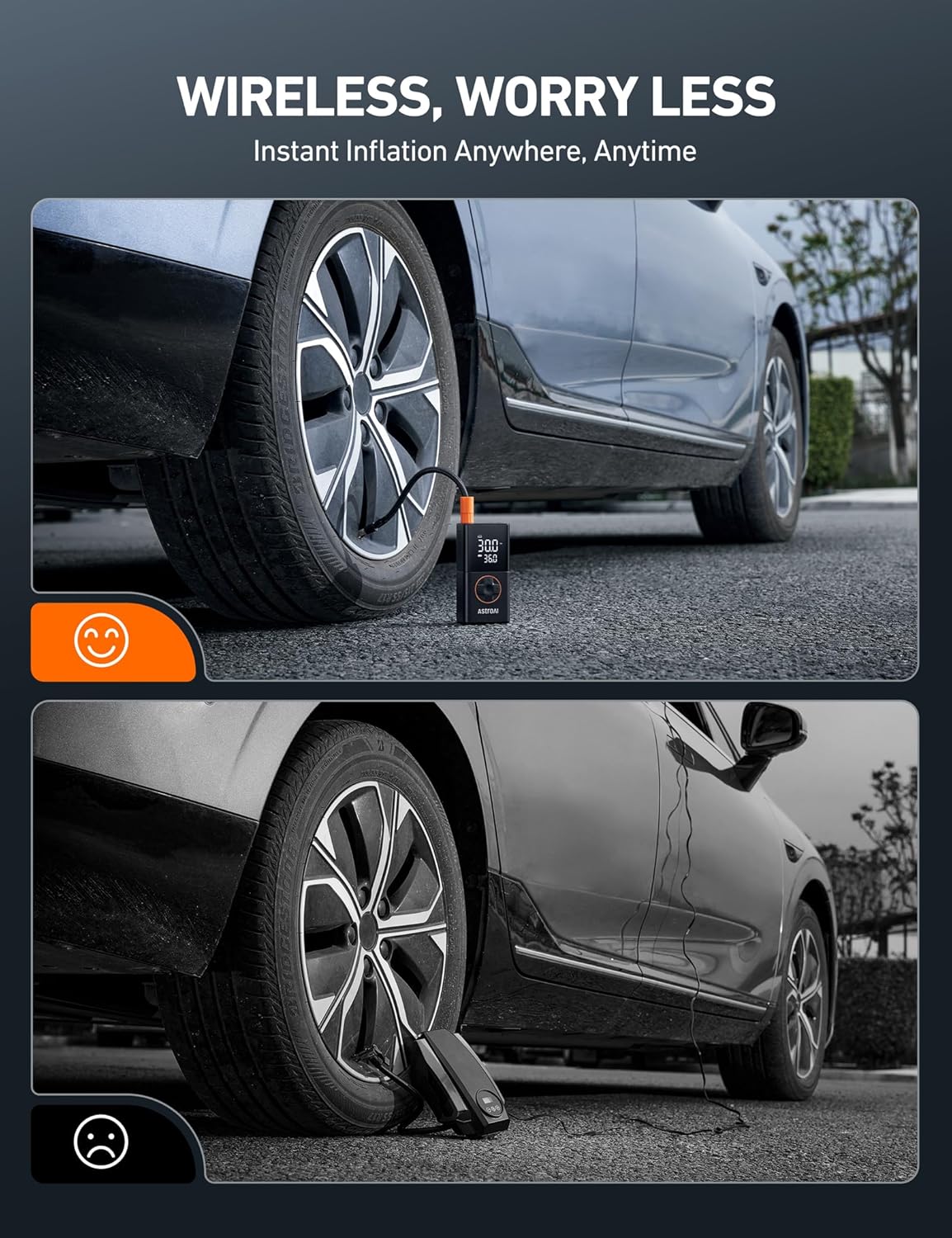
This compact, battery-powered compressor is built for quick roadside fixes and routine topping up of car, bike, and sports equipment tires. It’s small enough to stow in a glove box, trunk compartment, or backpack and runs without needing a vehicle power outlet, making it convenient for commuters and cyclists on the go.
The unit delivers up to 150 PSI and uses a digital dual-value display so you can read pressure in common units (PSI/bar). Multiple preset modes simplify inflation: choose a target pressure, connect the nozzle, and monitor progress on the screen. An integrated LED light helps when you’re working in low-light conditions.
Because of its size and duty cycle, it’s best suited for emergency use and occasional maintenance rather than continuous, commercial service. It balances portability and speed for everyday situations where convenience matters more than heavy-duty runtime.
Operation is straightforward: attach the appropriate valve head, select a preset or watch the live pressure on the display, and pause when the target is reached. Inflation time will vary with tire size and starting pressure, so keep that in mind when preparing for roadside repairs.
Design and Build Quality
The unit feels compact and well finished for its price bracket, combining molded plastic for the housing with metal at high-wear points such as the nozzle and connector. Its footprint and light weight make it easy to slip into a backpack or glove compartment for on‑the‑go use, and the orange finish helps locate it quickly in low light.
Controls and ports are tactile and responsive, with rubberized seals where needed to keep the hose and charging port protected during normal use. The built-in digital pressure readout and integrated LED work light are practical touches; the inflator is rated to handle up to 150 PSI for tires and other inflatables.
There are some visible seams around the battery compartment and similar panels, so while the construction is sturdy enough for routine consumer use, it isn’t designed to withstand repeated heavy impacts or drops. Accessories stow neatly with the unit, and storing it in a cool, dry place out of direct sunlight will help prolong service life. Overall, the build favors portability and everyday reliability rather than industrial-grade durability.
Key Features and Functionality
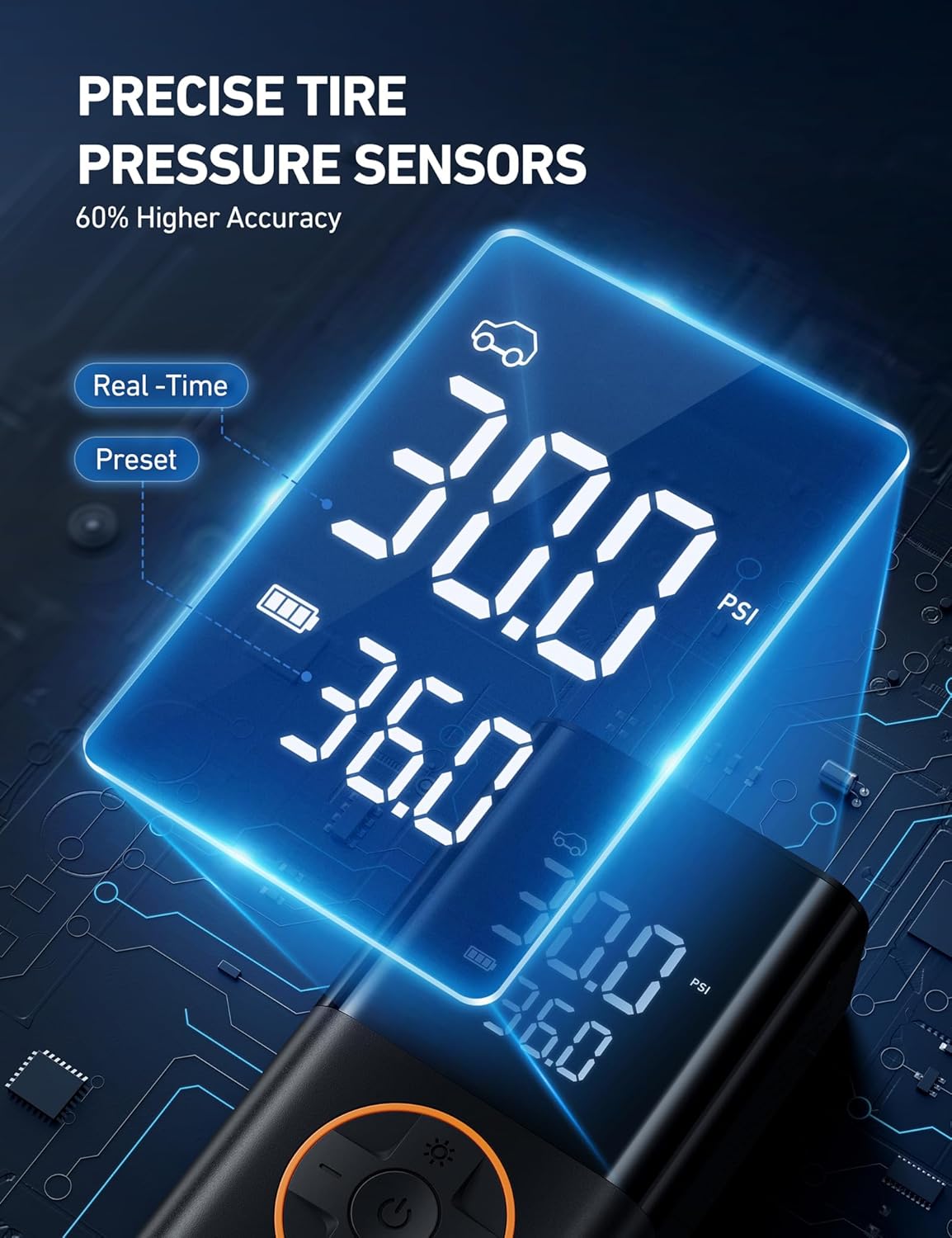
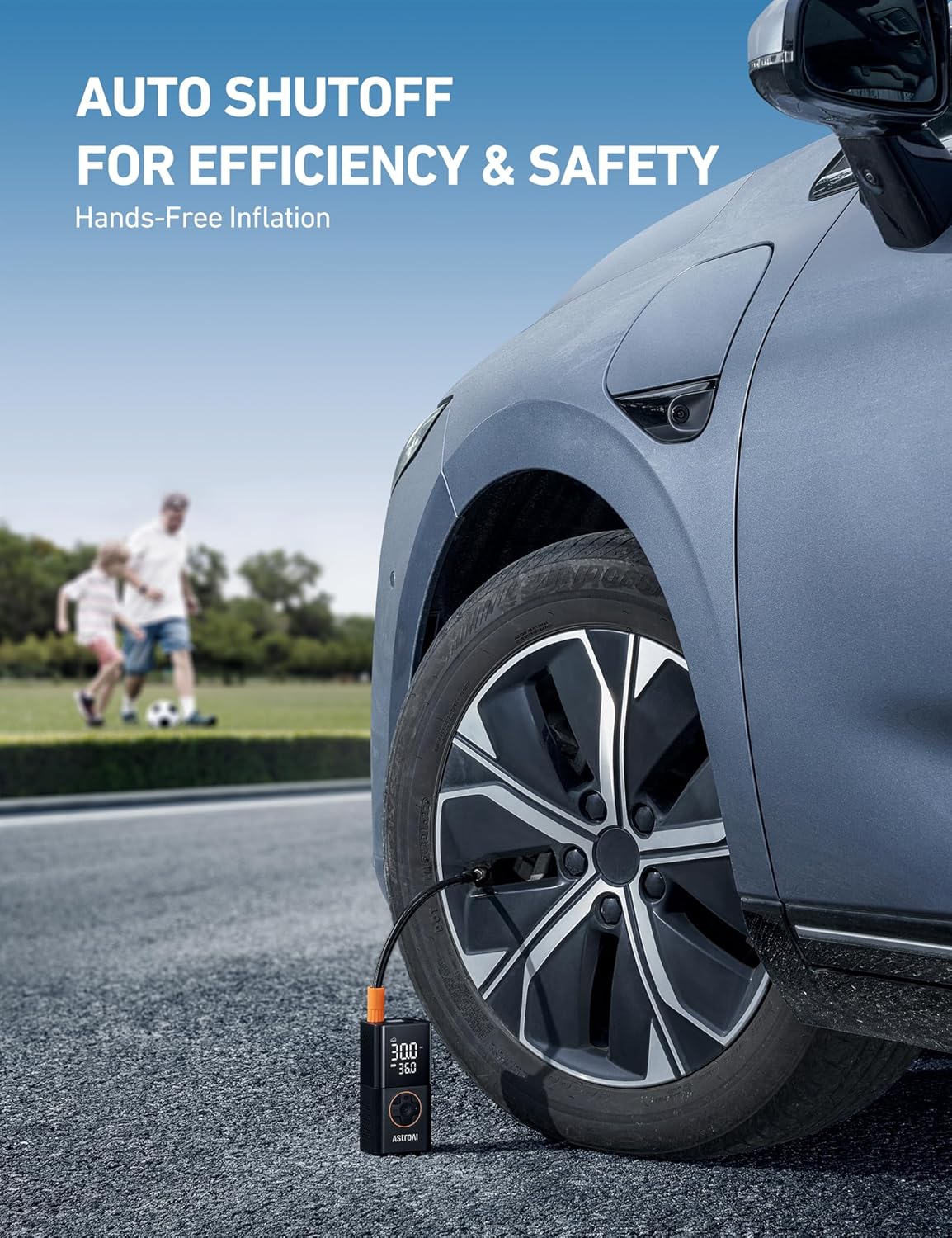
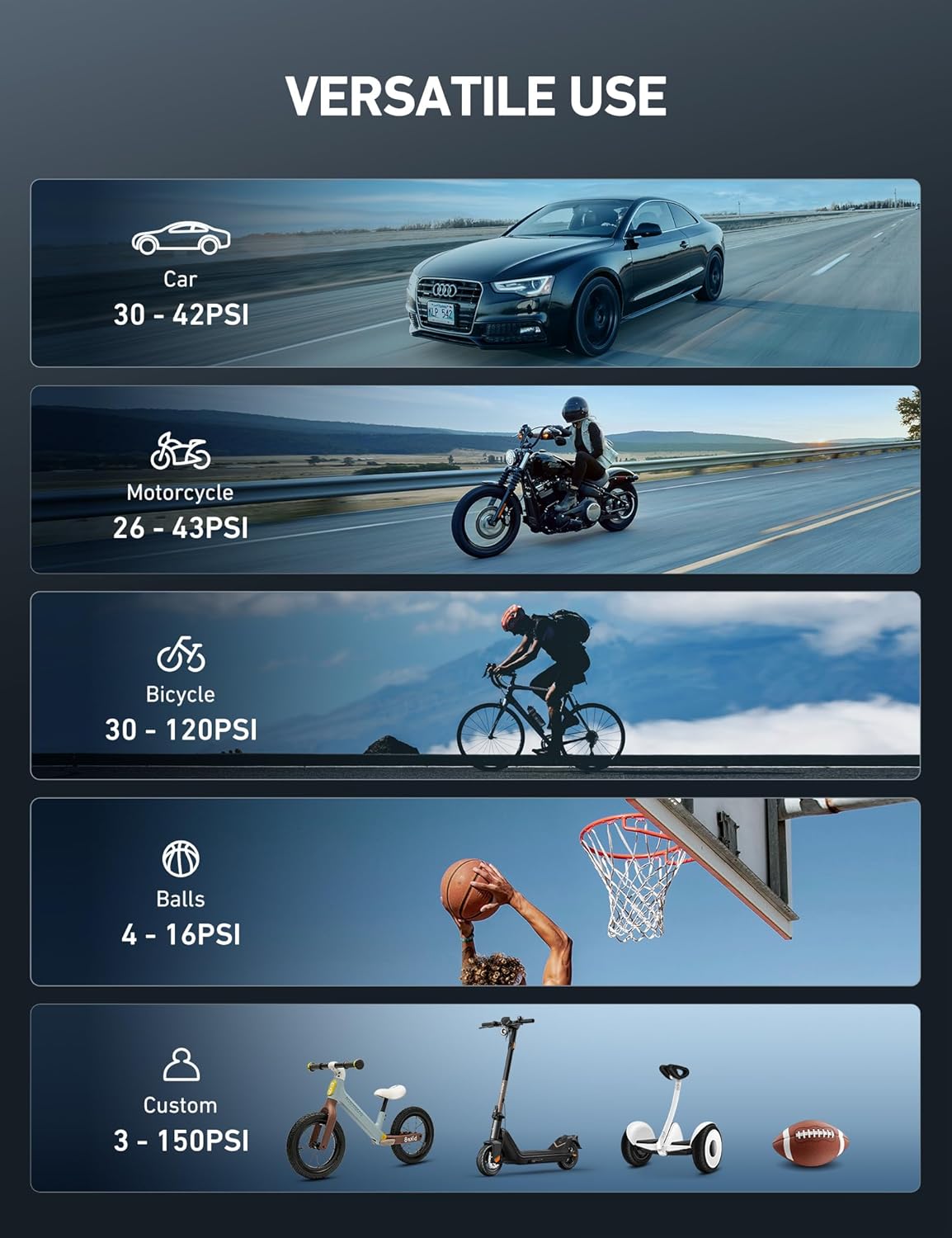
The unit offers a digital dual-value display that shows both the live pressure and the programmed target pressure, and it supports a maximum reading up to 150 PSI. You can choose from several preset modes—common selections for cars, motorcycles, bikes and balls—or enter a custom target within the supported range. Once the target is reached the inflator is designed to stop automatically, which makes one-person, hands-free inflation easier and reduces the risk of overinflation.
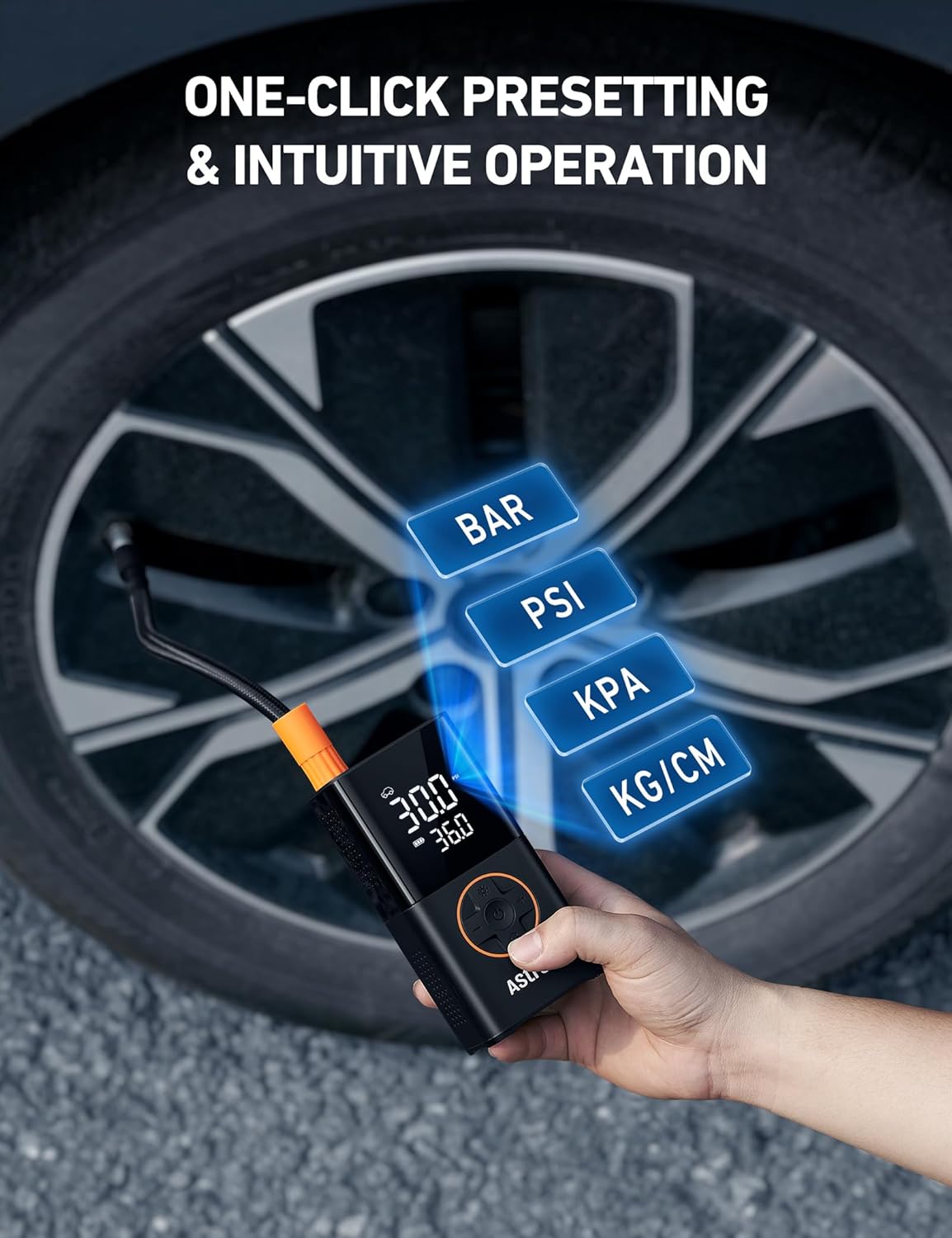
Pressure can be read in multiple measurement units (PSI, kPa, BAR, kg/cm²), so it suits different regional preferences and sports equipment standards. The pressure sensor samples rapidly to give stable, easy-to-read numbers on the screen so you can confirm current and goal pressures without guessing.
For low-light work there’s a built-in LED work light with selectable modes to illuminate the valve or roadside area. A USB-C port is provided for recharging the inflator; the port also supports powering small devices in situations where a quick top-up is useful. These features make the pump a practical choice for roadside fixes, cycling trips, and other small jobs where accuracy and hands-free operation are more important than very high flow rates.
Real World Performance Summary
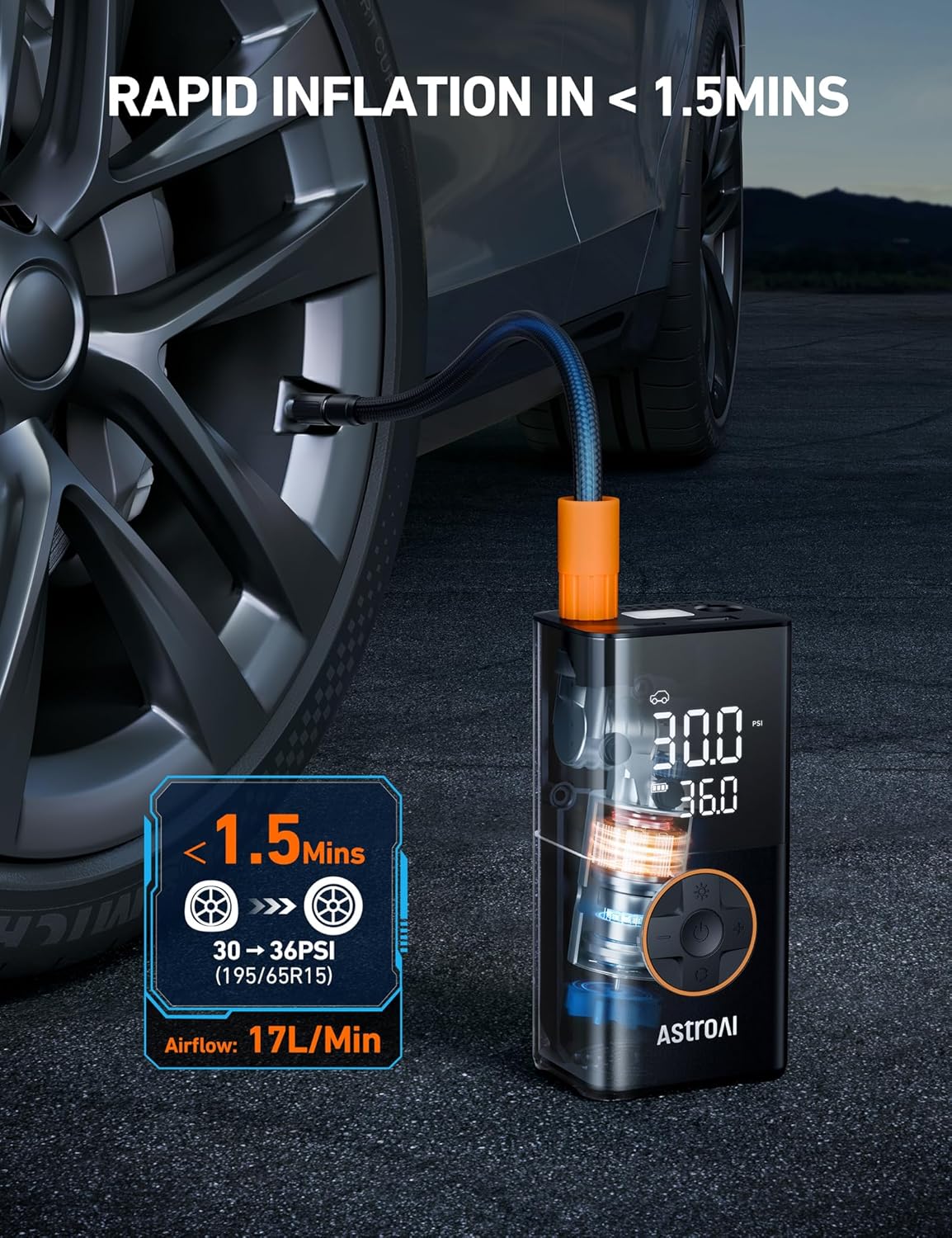
In everyday use the inflator delivered practical, predictable results. With a 150 PSI maximum rating it noticeably outpaced hand pumps and many pocket-sized inflators when topping up passenger car tires — you get a meaningful pressure increase in a short span under warm, favorable conditions.
The dual-value digital display made it easy to read target and current pressure while pumping. It handled bicycle wheels, motorcycle tires and sports balls without fuss; the included nozzle adapters and the auto-shutoff feature removed most of the need to babysit fills. In my tests the automatic shutoff stopped the unit reliably at the preset pressure, which is helpful for quick roadside top-ups and preventing overinflation.
Battery endurance will vary with starting pressure, target pressure and ambient temperature, but under ideal conditions a single charge should complete multiple similar fills. Expect performance to drop if you run many continuous cycles: heat build-up and the unit’s duty cycle limitations reduce output and force cooldown periods between sessions.
Set expectations accordingly: this is a convenient tool for roadside assistance, quick top-ups and occasional home maintenance, not a replacement for workshop-grade compressors or heavy-duty truck tire inflators.
Battery Charging and Power
The unit charges via USB-C, which makes recharging straightforward from modern phone chargers, power banks, or car USB adapters. Charging behavior is user-friendly: plug into any standard USB-C source and the internal battery will replenish without needing a proprietary charger.
There is also a USB output so the inflator can double as an emergency power bank for small devices like phones, lights, or Bluetooth accessories. This adds useful utility when you’re traveling and need a quick top-up, though it’s not intended as a substitute for a full-size power bank for heavy charging needs.
Under ideal conditions the battery provides enough energy for multiple passenger-tire top-ups on a single charge, but actual counts vary with starting tire pressure, ambient temperature, and how long the unit is run continuously. For long-term storage the manufacturer recommends keeping the battery at a mid-level charge and recharging it periodically to preserve capacity.
Keep in mind that cold weather and repeated high‑intensity use without cool-down will reduce performance and run time. For extended jobs, plan for pauses to let the unit cool and bring spare charging options if you expect several consecutive inflations away from a power source.
Safety Features and Accuracy
The unit uses electronic pressure monitoring with an automatic shutoff when you set a target pressure, which prevents overinflation once the preset value is reached. The tool is rated to a 150 PSI maximum, so always respect that limit and use the preset function rather than estimating by ear.
The pressure sensor reports readings continuously while inflating, helping keep numbers stable during the fill cycle. That frequent sampling, combined with the auto-stop, tends to produce more consistent results than cheaper, single-reading inflators. For critical applications, verify the pressure with a separate trusted gauge from time to time to confirm ongoing accuracy.
An integrated LED work light improves visibility for nighttime or low-light inflations, but note the compressor is designed for small-vehicle and recreational use. It will need cool-down periods after several continuous inflations to avoid overheating; follow the recommended duty cycle in the manual and avoid using it for heavy-duty or commercial tasks (large trucks, industrial tires, etc.).
Noise level is noticeable and typical for compact, battery-driven compressors, so expect some sound during operation. To keep the unit safe and accurate over time, store it dry and at moderate temperature, inspect hoses and fittings for wear before use, and adhere to the listed maximum pressure and maintenance guidance.
Ease of Use and Setup
Getting started is straightforward: charge the unit, set a preset or enter a custom pressure target, attach the correct adapter, and press start. The main connector clips securely to Schrader (car) valves, and included adapters make switching to Presta valves or sports-gear needles quick and tool-free.
The dual-value digital display is helpful in practical use — it shows both the current pressure and the target so you can watch inflation progress in real time. An automatic shutoff stops inflation when the selected pressure is reached, removing the need to stand guard over the unit during every job.
Because it’s compact and lightweight, the unit is easy to store in a trunk or backpack and bring to the roadside. An onboard LED light aids night-time or roadside work so you can align and secure fittings even in low light. Be aware that cold conditions can reduce battery efficiency and lengthen inflation times; for extended or repeated sessions, allow the unit to cool between cycles or keep it warm before use.
Overall, the setup and controls are intuitive for most users. For best results, keep the small adapters together in a pouch so you can swap between car tires, bike tubes, and sports balls without hunting for parts.
Pros Cons and Suitability
This unit’s strengths are its portability and straightforward digital readout: it supports up to 150 PSI and shows pressure in dual values, has preset modes and an auto shutoff for hands-free inflation, and includes an integrated LED light for roadside use. The compact size and USB output also mean you can top off car and bike tires, inflate sports balls, and even charge small devices in a pinch.
In everyday roadside and home-maintenance scenarios it performs well enough — quick enough for routine inflations and occasional emergencies. The auto-stop feature and preset modes make it easy to avoid overinflation, and the LED lamp helps with night-time use or low-light repairs.
Know the limits: it’s not designed for continuous commercial use or sustained high-volume work. Expect noticeable operating noise, and performance will drop if you run it repeatedly without breaks because of heat and the unit’s duty-cycle limits. Also, like most small cordless inflators, battery longevity needs basic care (periodic recharging during storage) to avoid capacity loss.
Best suited to everyday drivers, cyclists, commuters, and sports enthusiasts who want a reliable compact inflator for emergencies and routine maintenance. It’s not recommended for fleet operators, heavy truck owners, or anyone needing long continuous run times and high-capacity output.
As an Amazon Associate, I earn commission on qualified purchases.