STA-BIL Storage Fuel Stabilizer | Keeps Fuel Fresh for 24 Months, Prevents Corrosion, Gasoline Treatment Fuel Additive that Protects Fuel System, Gas Stabilizer for Fuel Storage, 32 oz. Review
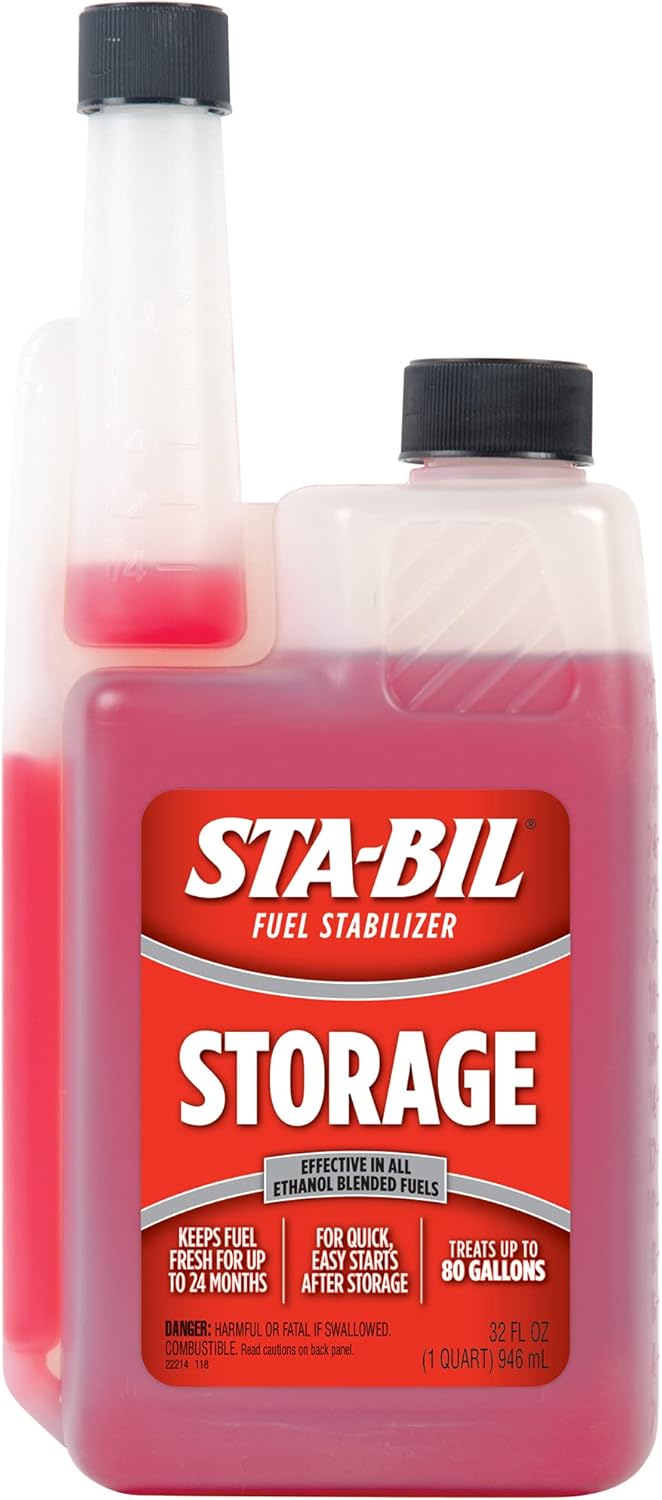
STA-BIL Storage Fuel Stabilizer (32 oz) is a concentrated gasoline treatment formulated to keep fuel usable for up to 24 months and to help prevent gum, varnish, rust and corrosion in stored fuel systems. It works with ethanol blends up to E85, uses a simple 1 oz per 2.5 gal dosing ratio, and is intended as a preventive treatment added to fresh fuel before storage. The bottle’s built-in measuring cap and durable packaging make dosing and storage straightforward for seasonal equipment and small engines.
Design and build quality
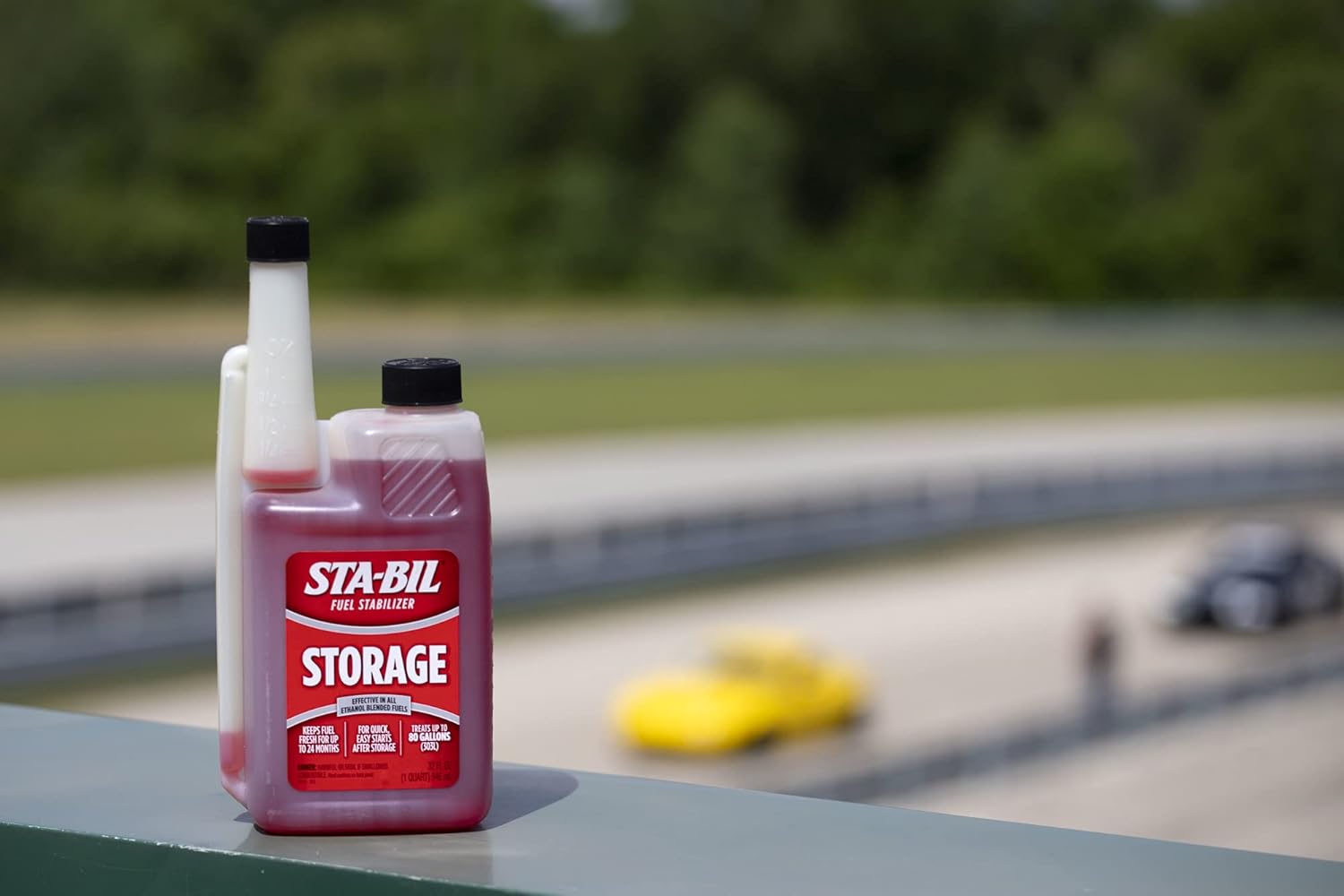
The 32-ounce bottle is molded from rigid plastic and prioritizes utility over shelf presentation. A long, slightly tapered neck and a flexible body make it easy to control flow for small fills, while a larger removable cap allows quick bulk pouring when needed.
The cap system includes a smaller measuring cap so you can dose without extra tools. Graduated markings are molded into the side of the bottle to help ensure consistent dosing, and front labels give clear directions and stated treatment ratios.
Threads and seals on the caps feel solid and resist leaking during normal handling and storage. Size and weight are compact enough to tuck onto a garage shelf, in a utility cabinet, or in a service kit without taking up much space.
Key features and functionality
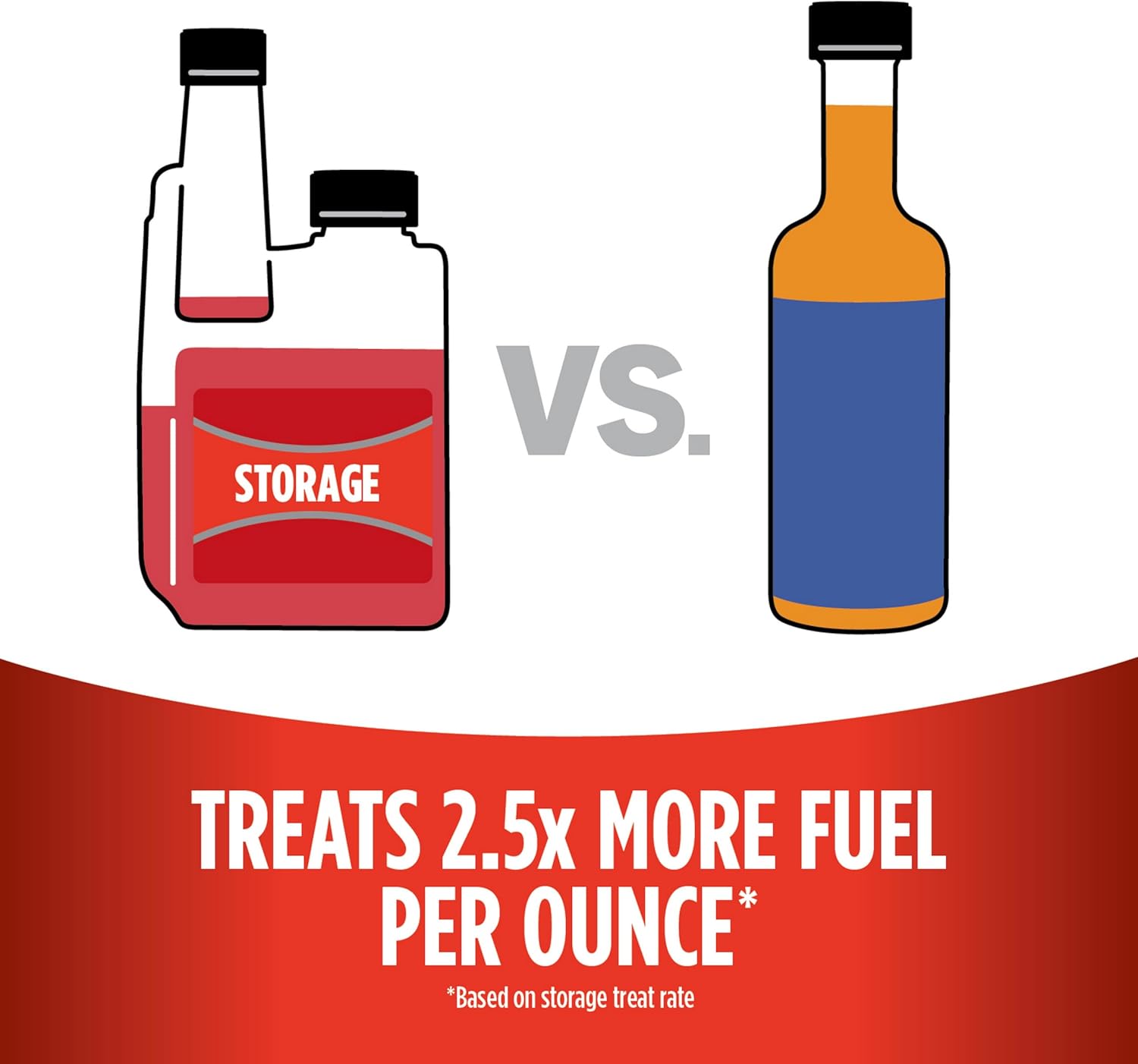
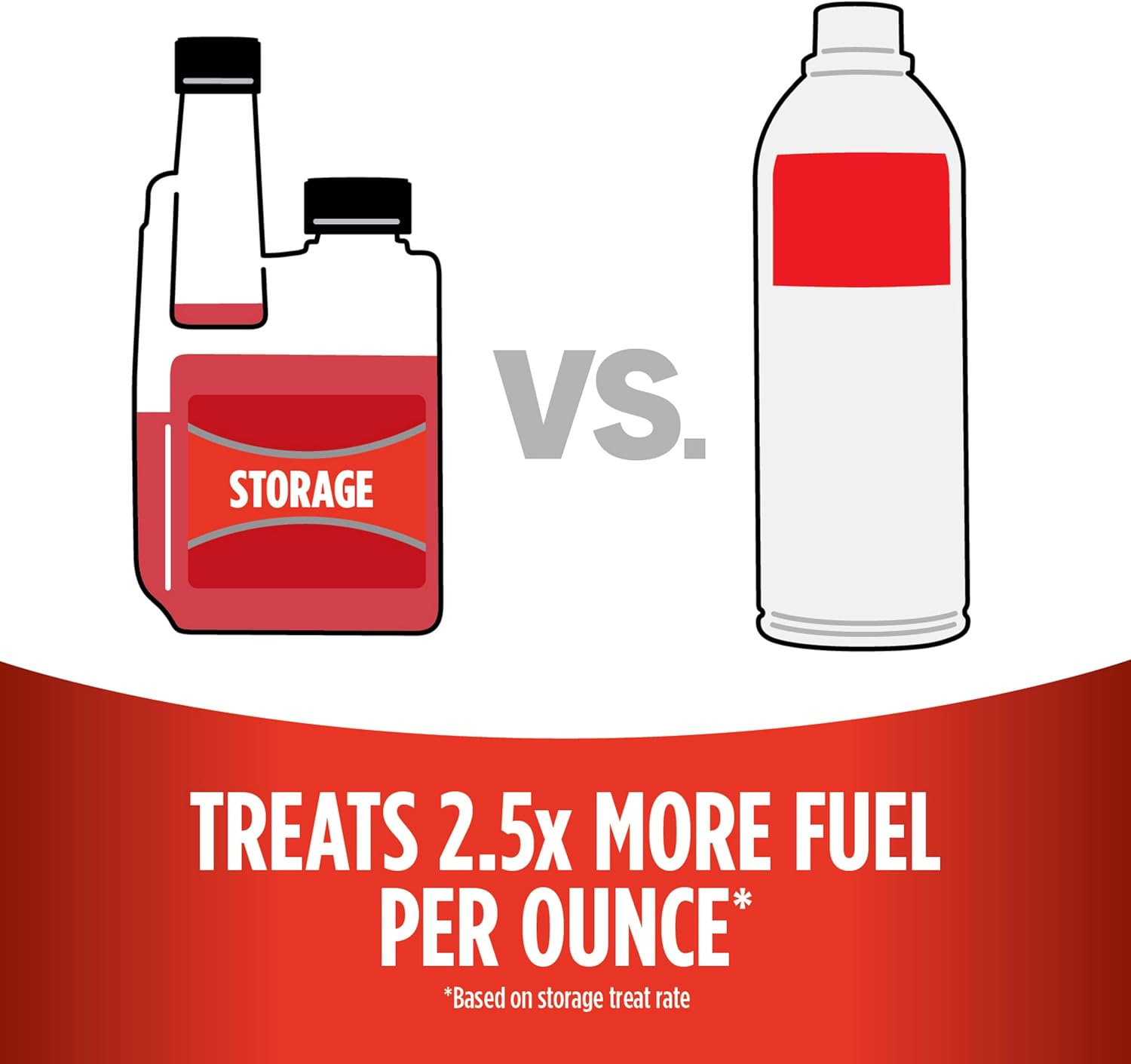
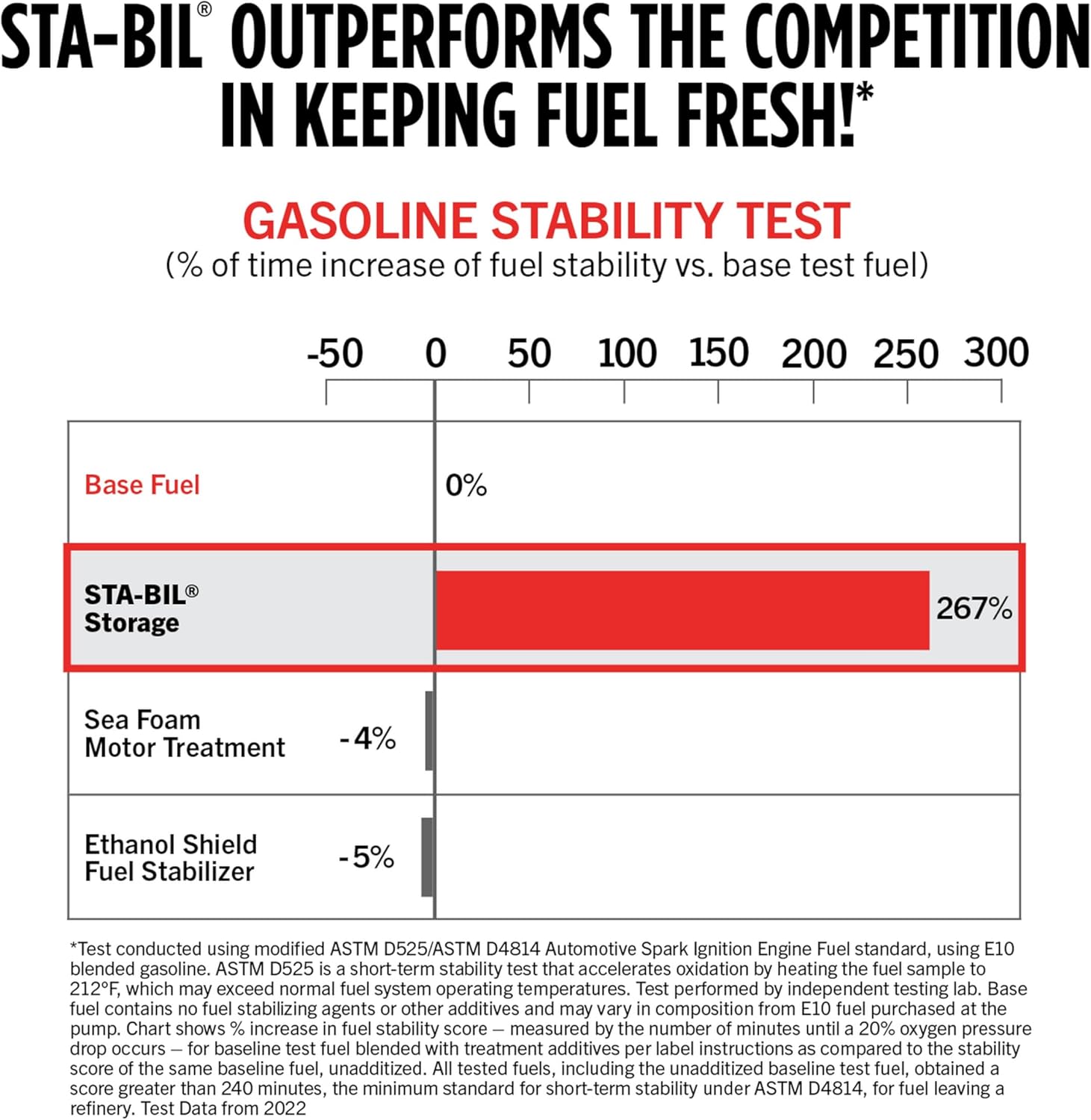
This formula uses a straightforward, measurable dosing ratio—1 ounce treats about 2.5 gallons of gasoline—so a full 32-ounce bottle treats roughly 80 gallons. It’s formulated to keep stored fuel usable for up to 24 months and is alcohol‑free, aimed specifically at preventing gum, varnish, rust and corrosion that can form when ethanol‑blended fuels sit idle.
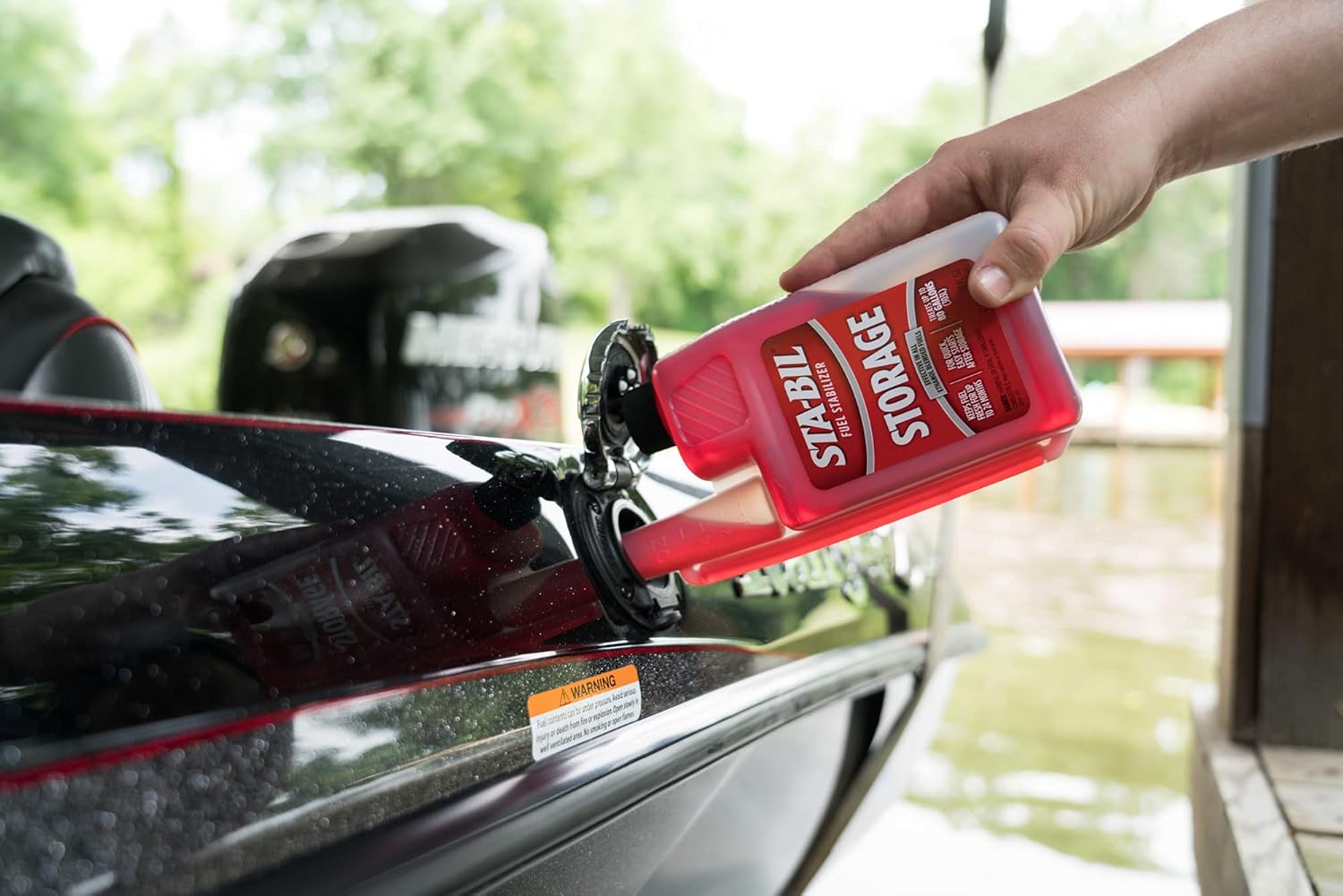
Compatibility is broad: it’s rated for use with ethanol blends up to E85 and works with both two‑cycle and four‑cycle engines. That makes it appropriate for lawn and garden equipment, motorcycles, boats, and portable generators.
Directions call for adding the treatment to fresh fuel and then running the engine briefly so the treated fuel circulates through the system. Dosage is proportional, so adjust the amount for larger or smaller tanks based on the 1 oz per 2.5 gal guideline.
Because it’s concentrated, a single bottle covers several uses, reducing waste and trips to the store. For best results, add the stabilizer when filling for storage and keep treated fuel in clean, properly sealed containers.
Performance in real world use
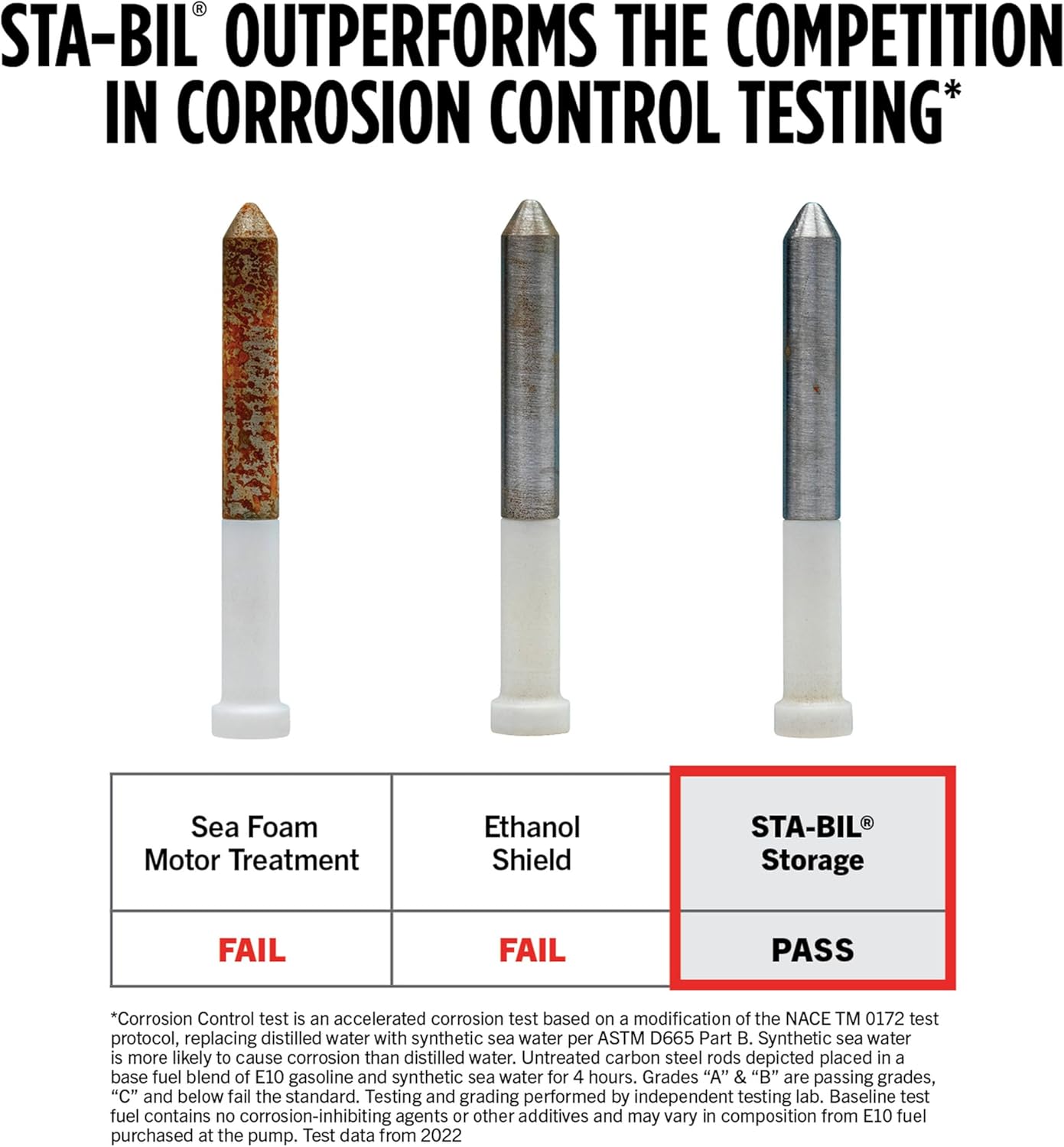
When used as directed, this treatment helps prevent the common problems that show up after seasonal storage: clogged carburetors, varnished fuel lines, and hard starting. It preserves fuel integrity for up to 24 months, which matches typical off‑season intervals for lawn mowers, snow blowers, boats and other seasonal equipment.
It’s also practical for standby generators where fuel may sit for long periods. This product is preventive, not restorative — it won’t reliably fix fuel that is already oxidized, contaminated with water or sediment, or otherwise degraded.
For best results, add the treatment to fresh fuel before storage and run the engine briefly so the preservative circulates through the tank, lines and carburetor. Users who follow that step report more dependable starts and fewer carburetor cleanings.
Ease of use and setup
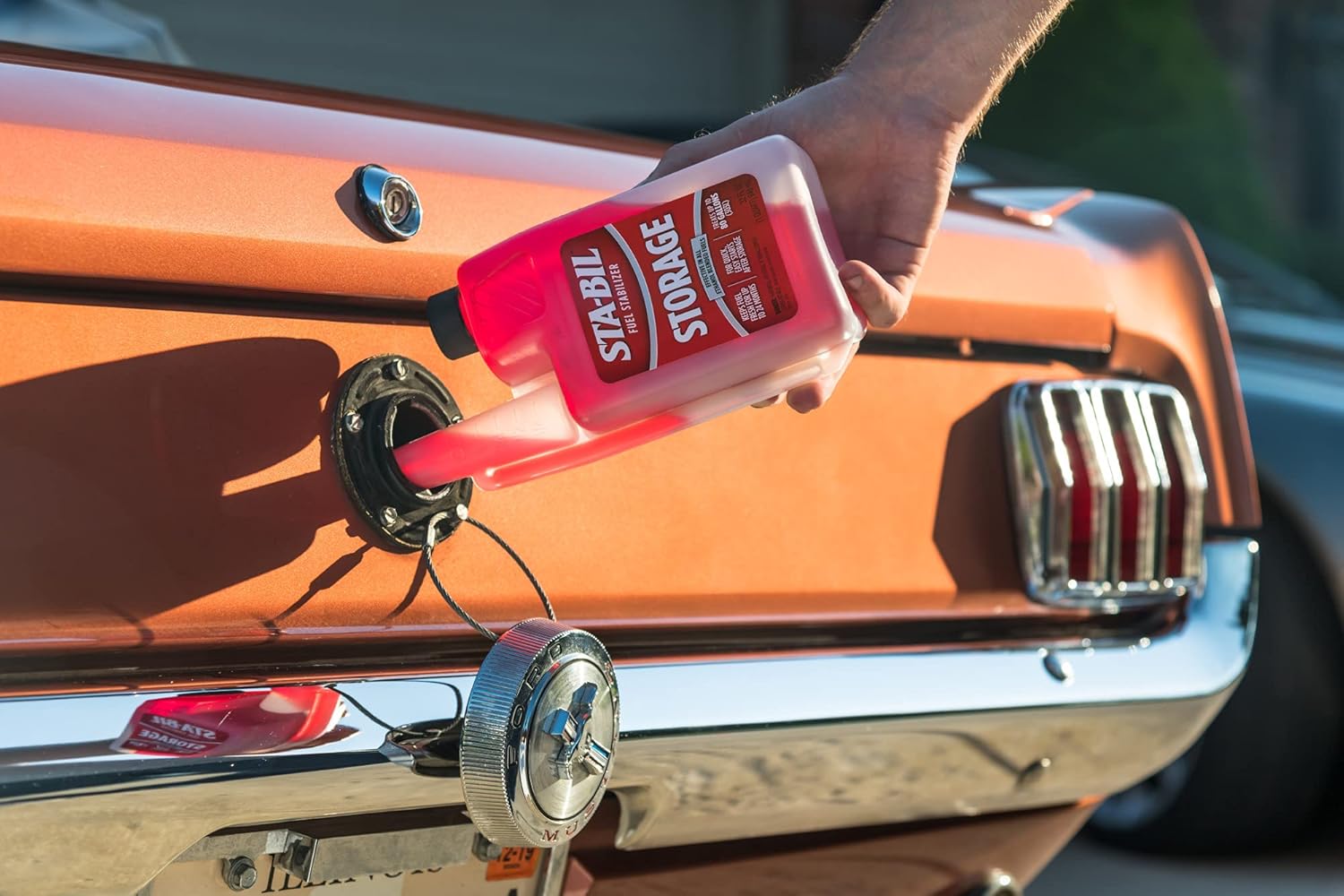
The bottle is built for DIY use: it has a small measuring cap and a larger pour spout. Use the small cap to squeeze measured amounts through the long neck for precise dosing in lawnmower or snowblower tanks, and switch to the larger cap when you need to pour into gas cans or car tanks.
Dosing is straightforward — one ounce treats 2.5 gallons — so a full bottle treats roughly 80 gallons total. For routine prep, treat only fresh fuel (don’t try to revive already stale gas), add the calculated amount, then run the engine for about five minutes so treated fuel circulates through the system.
When storing, fill tanks to roughly 95% capacity to limit air space and condensation. The label also recommends marking the date the bottle was opened and keeping track of use, since the product remains effective for up to two years after opening.
Safety storage and shelf life
Store fuel containers and tanks mostly full to minimize air space and condensation, which accelerates degradation. Only treat fresh gasoline—adding the conditioner to old, already-degraded fuel won’t restore its original quality.
The manufacturer rates the product as effective for up to two years after application, so marking the date on the bottle or tank is a simple way to track shelf life. This formula is made for gasoline and ethanol blends through E85 and is not intended for use in diesel engines.
Handle and store the bottle in a cool, dry, well-ventilated place away from heat and ignition sources. Keep the cap tightly closed, keep it out of reach of children, and follow the label for proper disposal and spill response.
Pros cons and trade offs
The product shines as a preventative treatment: it’s formulated for use with gasoline and common ethanol blends and comes in a concentrated form with a measuring cap for accurate dosing. That makes it easy to treat storage tanks, small-engined equipment, seasonal toys, and spare fuel cans without frequent re-dosing.
Its main maintenance benefit is preventive—treated fuel resists varnish, gum and corrosion, which helps reduce carburetor and fuel-system problems and improves chances of reliable starting after weeks or months of storage. The manufacturer advertises protection for treated fuel for up to 24 months, which is convenient for seasonal users and hobbyists.
Limitations are important to note: it won’t fix fuel that is already badly degraded, contaminated with water, or laden with solids — those situations require fuel recovery, filtration, or disposal and replacement. The 32-ounce bottle is a practical size for many users, but it can feel bulky if you only need a few small doses; single-use or smaller bottles may be more convenient for infrequent use.
For best results, treat fresh fuel at the time of storage, follow the label dosing instructions, and continue basic fuel-handling practices (proper sealing, avoiding water contamination, and periodic inspection). Used as intended, it reduces routine maintenance and helps keep seasonal equipment ready to run.
Who this product is best for
This is aimed at people who put gasoline-powered equipment into storage for months at a time. If you winterize a lawn mower, snowblower, outboard, motorcycle, or small engine and want the fuel to remain usable through the off-season, this treatment is designed for that use.
It’s also practical for homeowners who keep gas cans on hand for occasional projects or for households that maintain standby generators. It’s not a cure for already-bad gas: add it to fresh fuel at the start of storage and run the engine a few minutes so treated fuel circulates.
If you drive a vehicle every day, the benefit is more limited — regular turnover of fresh fuel already prevents most storage-related issues. The biggest payoff is when fuel will remain unused for extended periods and you want to avoid drain-and-clean cycles or unexpected starting problems after storage.
As an Amazon Associate, I earn commission on qualified purchases.